Status
Habitat
Range
Group
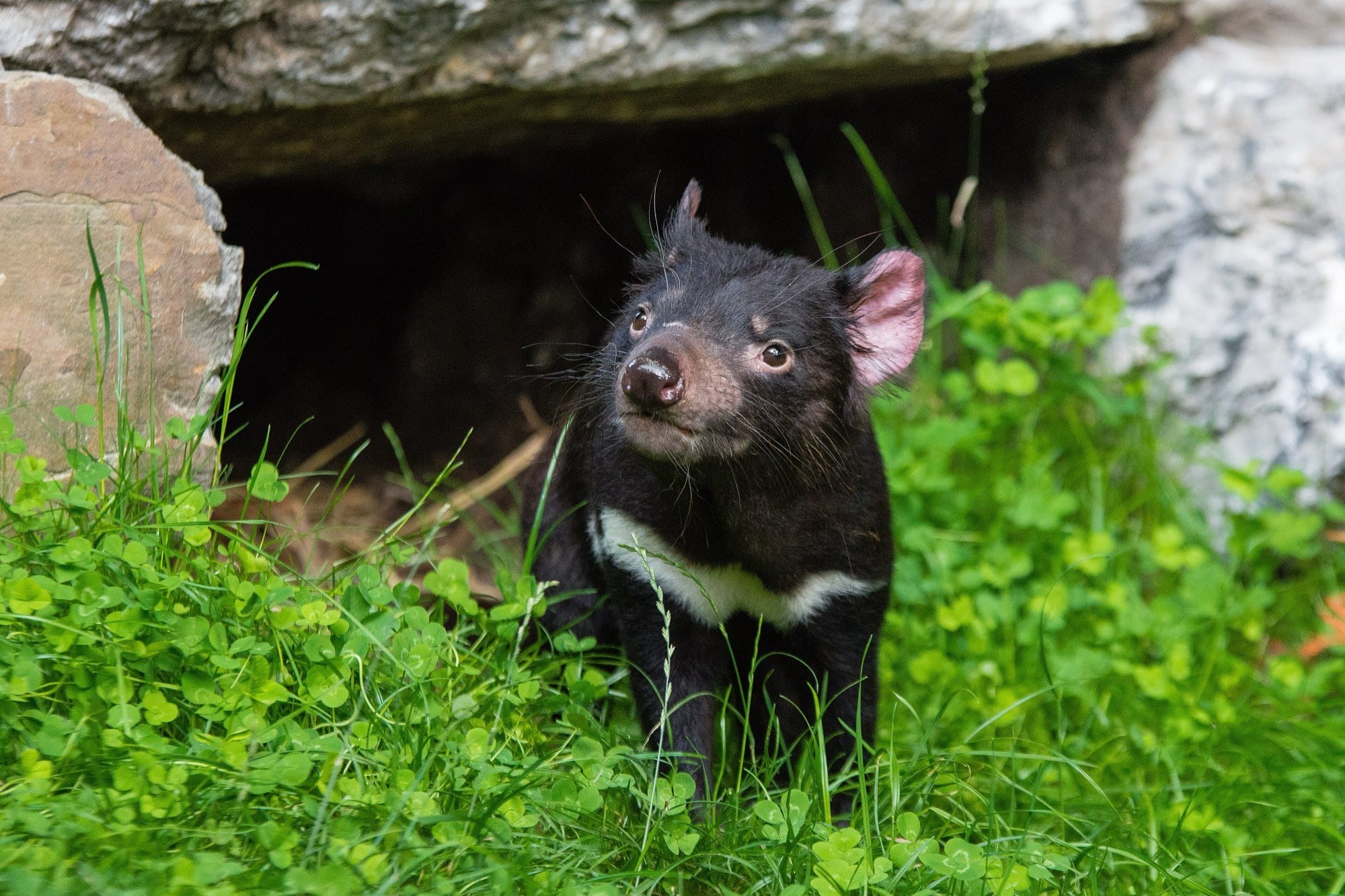
Fighting over carcasses spread a cancer between individuals.
Devil facial tumour disease is not a virus. It is the tumour itself — living cancer cells passed mouth to mouth when animals bite each other at carcasses and during mating, taking hold because the population's immune systems are too genetically similar to reject the foreign tissue. Since the mid-1990s it has removed the large majority of the wild population.
The response has been captive insurance populations, translocation to disease-free islands, and a trial reintroduction to mainland Australia after some three thousand years of absence. There are also signs of resistance appearing in wild devils and of a second, independently arisen tumour line — evolution running in both directions at once.
The open shelf
More frames of the tasmanian devil
Streamed live from the Commons Quality Images archive, eighteen at a time. Tap any frame to study it — each remains its photographer’s.
0 shown
Developing the next eighteen…