Status
Habitat
Range
Group
Not one animal but a dozen, each shaped by the island it was stranded on.
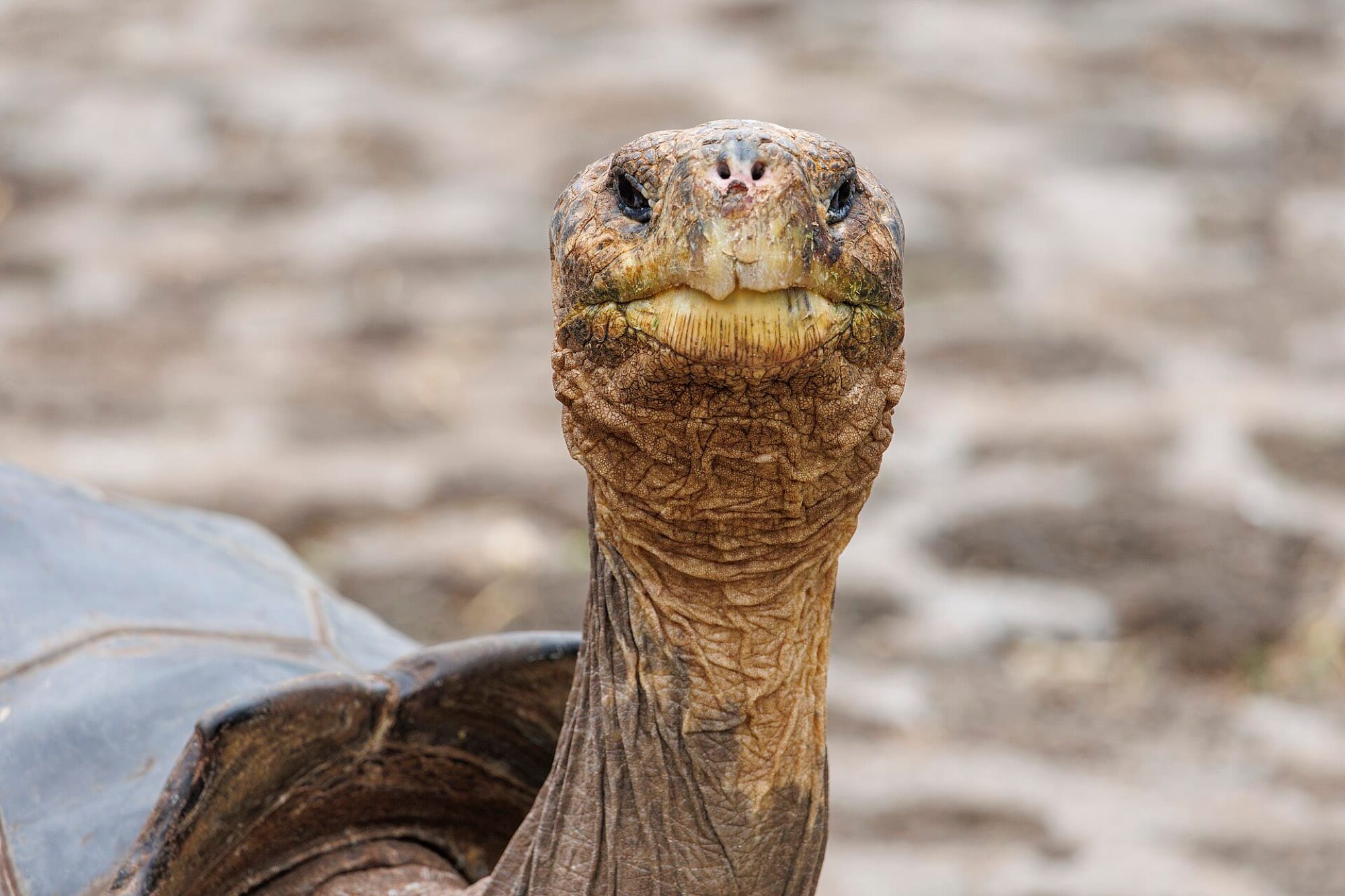
Chelonoidis is a group, not a single animal: around a dozen surviving species, from perhaps fifteen originally described, separated across islands and even across individual volcanoes on Isabela. Domed shells belong to wet highlands where food is underfoot; saddlebacked shells, with the front of the carapace raised into an arch, belong to arid islands where the animal has to reach upward for cactus. Darwin was shown that a tortoise could be assigned to its island by shell alone, and largely failed to register what it meant at the time.
Whalers and sealers took an estimated two hundred thousand tortoises as shipboard provisions, and the goats, pigs and rats they left behind did the slower damage by stripping vegetation and eating eggs. Recovery came from two unglamorous programmes run for decades: eradicating introduced mammals island by island, and captive breeding with repatriation of juveniles past the age at which rats can kill them. Española went from fourteen surviving adults to a self-sustaining wild population.
The open shelf
More frames of the galápagos giant tortoise
Streamed live from the Commons Quality Images archive, eighteen at a time. Tap any frame to study it — each remains its photographer’s.
0 shown
Developing the next eighteen…