Status
Habitat
Range
Group
It crosses open ocean by riding the current and waiting for the tide.
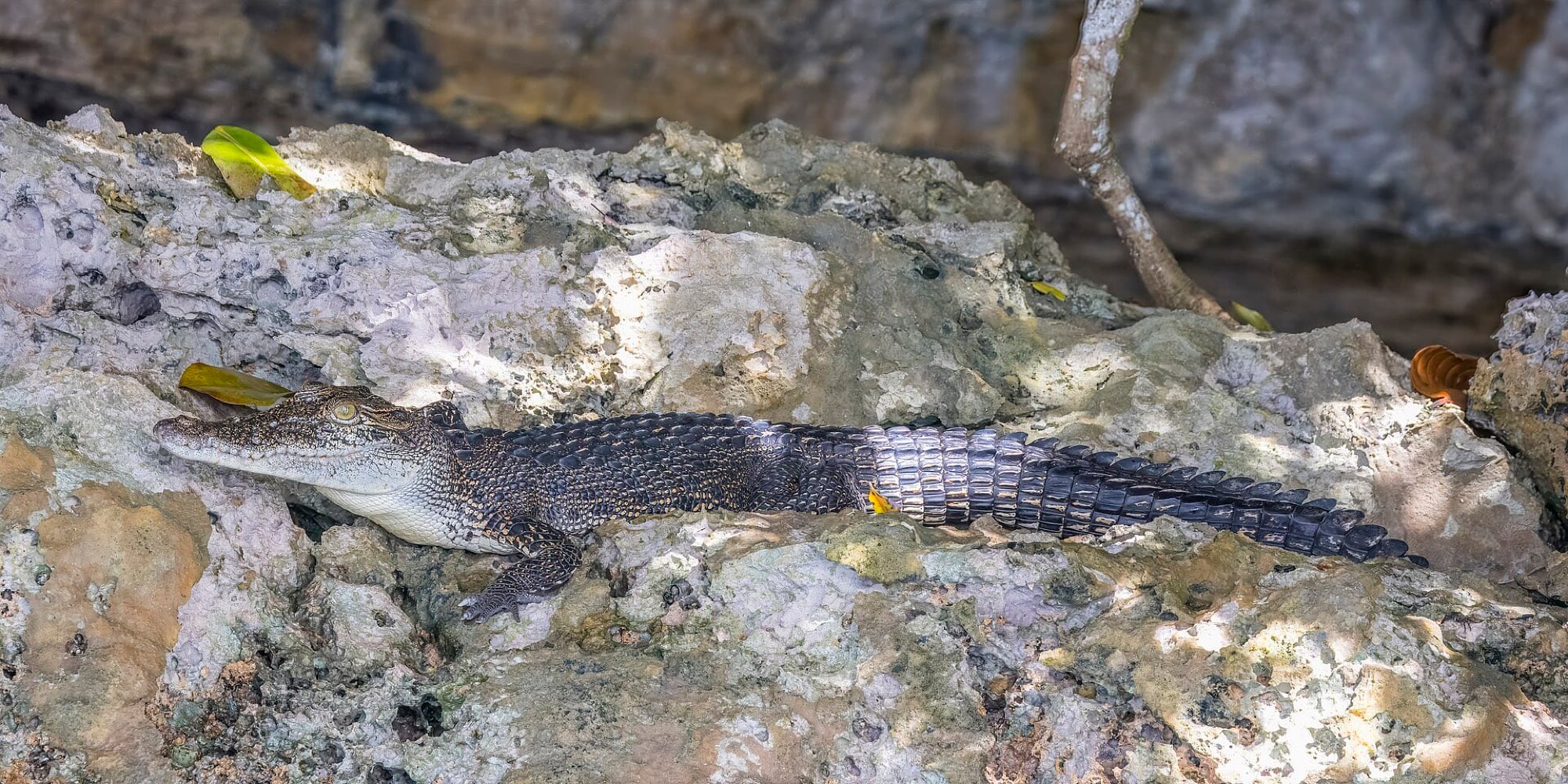
Satellite tracking upended the assumption that these are river animals with an unusual tolerance for salt. They are genuinely ocean-going, and they travel efficiently: rather than swimming against a current, a tagged crocodile will hold position in a tidal eddy for hours and then move only when the flow turns in its favour. That behaviour explains a distribution spanning from eastern India to Vanuatu without any need for a land bridge.
Australia hunted the species to an estimated few thousand animals before protecting it in 1971. The Northern Territory population has since recovered to around a hundred thousand, sustained partly by a regulated egg-harvest and ranching industry that gives landholders a financial reason to keep wetlands intact. It is one of the few large-predator recoveries substantial enough to have created a management problem rather than a conservation one.
The open shelf
More frames of the saltwater crocodile
Streamed live from the Commons Quality Images archive, eighteen at a time. Tap any frame to study it — each remains its photographer’s.
0 shown
Developing the next eighteen…