Status
Habitat
Range
Group
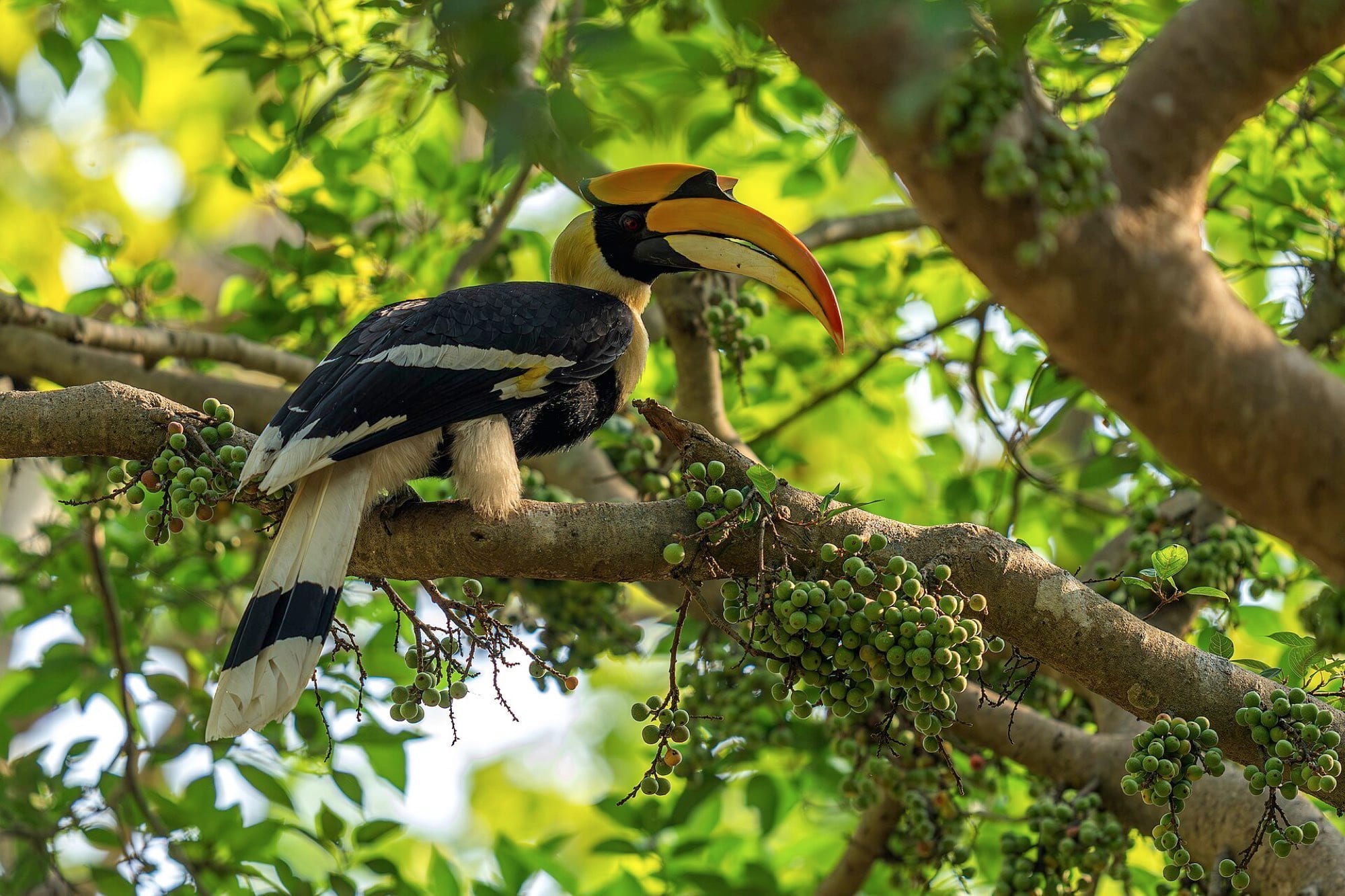
Seals its mate inside a tree with mud, and feeds her through a slit.
The female enters a natural cavity high in a tall tree and the entrance is walled up with mud, droppings and fruit pulp until only a vertical slit remains. She moults inside, incubates, and is fed entirely by the male for around four months. If he is shot in that window, the brood and the female both die — which makes hornbill hunting unusually costly per bird.
Hornbills swallow large fruits whole and pass the seeds intact across kilometres of forest, including those of dipterocarps and figs too big for smaller frugivores. Where hornbills are gone, the composition of the next generation of forest quietly changes. Their limiting resource is not food but old trees large enough to hold a nest cavity, which is why selective logging can empty a forest that still looks intact.
The open shelf
More frames of the great hornbill
Streamed live from the Commons Quality Images archive, eighteen at a time. Tap any frame to study it — each remains its photographer’s.
0 shown
Developing the next eighteen…