Status
Habitat
Range
Group
Spends most of its life out of sight of land, and all of its fame on it.
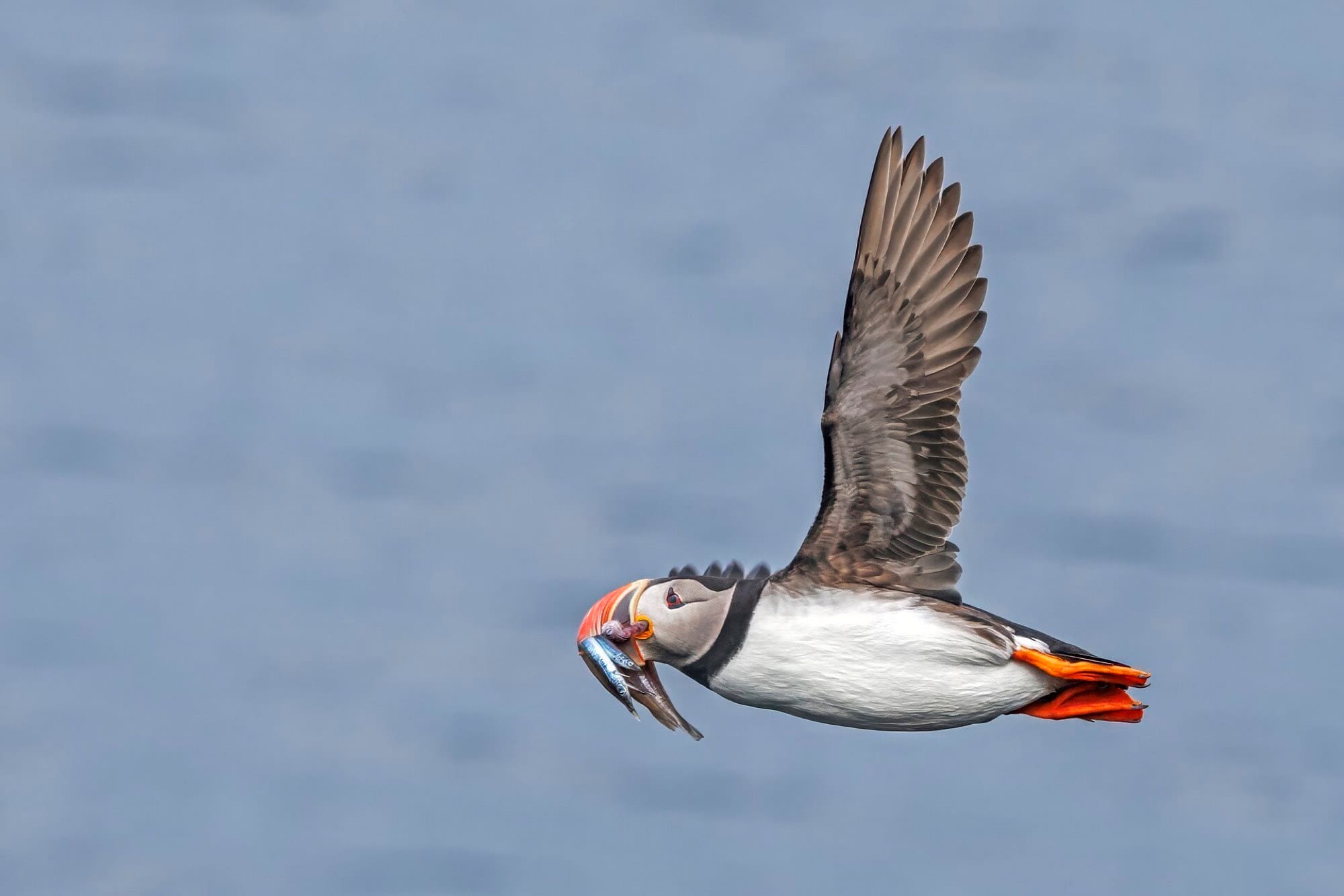
Backward-facing spines on the palate and a hinged, flexible jaw let a puffin hold one fish while catching the next, so a bird can return to the burrow with ten or more sandeels laid neatly across the bill. The colourful plate on that bill is seasonal and is shed after breeding; a winter puffin at sea is a drab, grey-faced bird most people would not recognise.
The decline is a food-web problem, not a persecution one. Warming water has pushed cold-adapted sandeel and capelin stocks north and out of reach of colonies whose chicks depend on them, and industrial forage-fishery pressure compounds it. Adults survive lean years; the chicks are what fail, which means colonies can look busy for a decade while producing almost nothing.
The open shelf
More frames of the atlantic puffin
Streamed live from the Commons Quality Images archive, eighteen at a time. Tap any frame to study it — each remains its photographer’s.
0 shown
Developing the next eighteen…