Status
Habitat
Range
Group
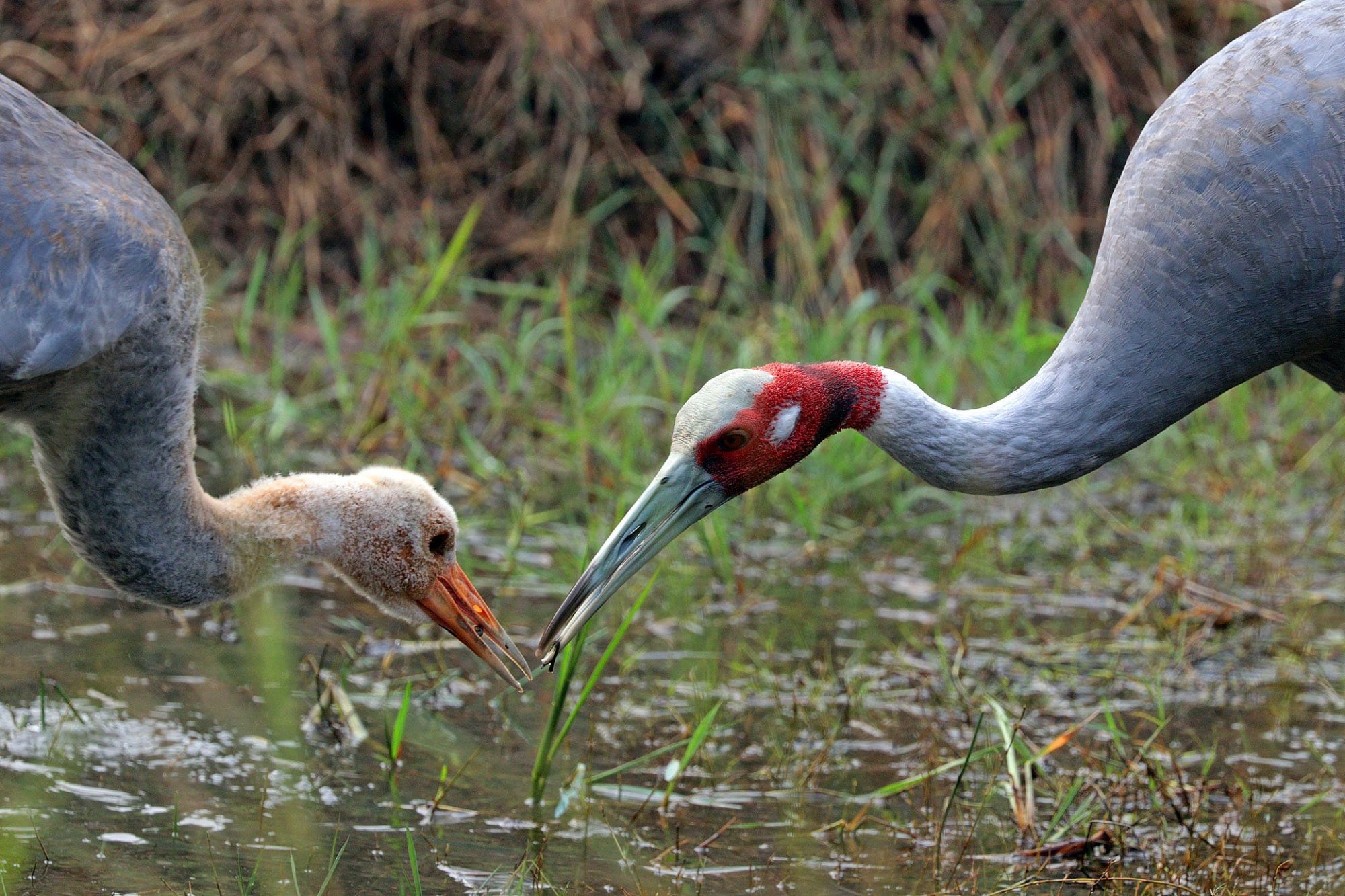
The tallest flying bird, and it nests in the middle of farmland.
Pairs are long-term and territorial, and they duet — a unison call with the head thrown back, audible across several kilometres of flat wetland. In India the bird carries a folk reputation for fidelity that has, in practice, bought it real tolerance: nests are left standing in flooded paddy, and farmers often know each local pair.
That tolerance is now the species' main asset, because the wetlands themselves are going. Drainage, canal conversion and changes in cropping have removed the shallow water it needs, and the deaths that remain are unglamorous — powerline collisions, pesticide, and eggs lost when a field is worked. The Indian population is by far the largest; the Australian and South-East Asian groups are much smaller and more fragile.
The open shelf
More frames of the sarus crane
Streamed live from the Commons Quality Images archive, eighteen at a time. Tap any frame to study it — each remains its photographer’s.
0 shown
Developing the next eighteen…