Status
Habitat
Range
Group
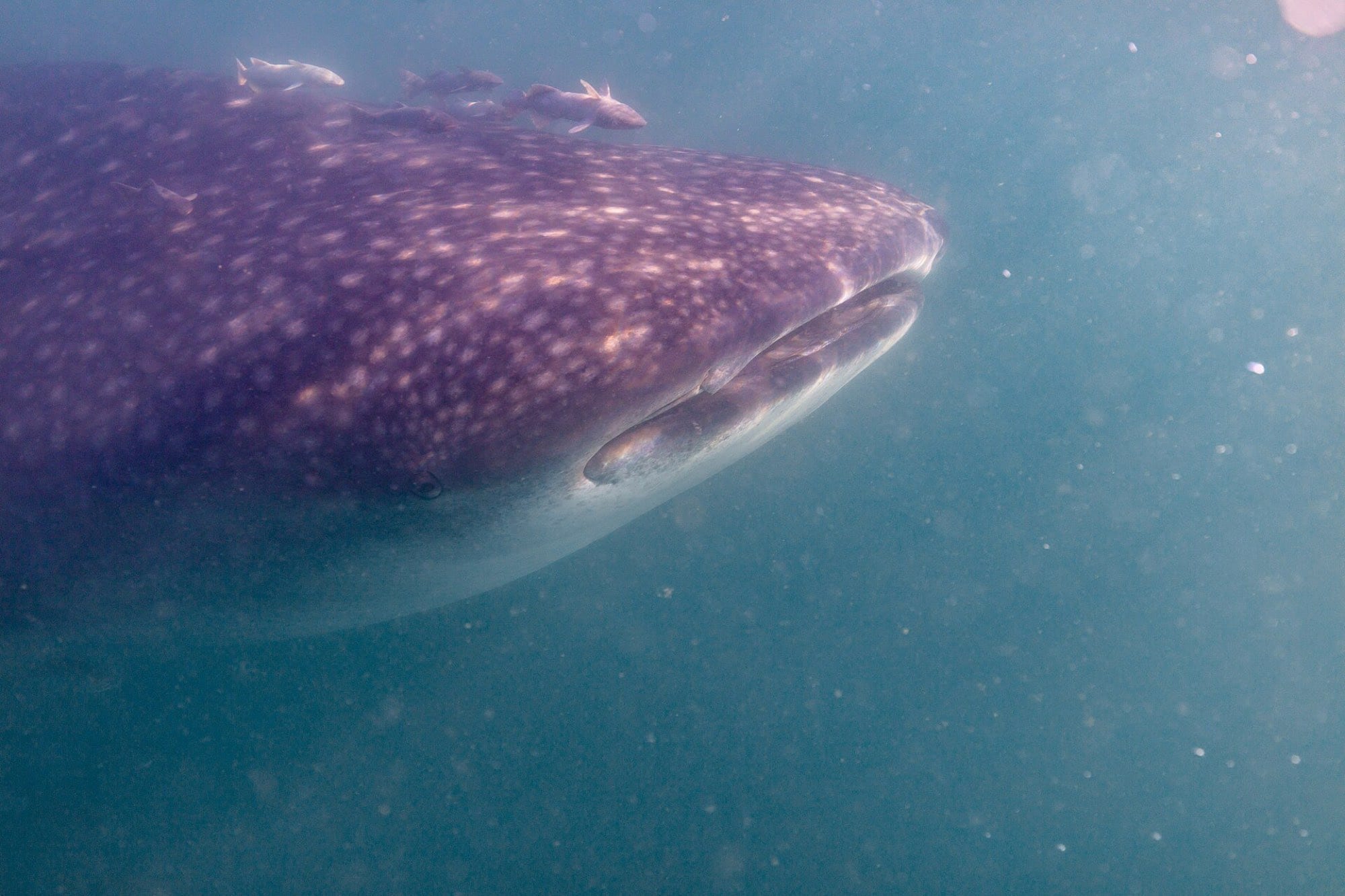
The largest fish alive filters plankton through a mouth a metre and a half wide.
The spot and stripe pattern behind the gills is unique to each animal and stable for life, so researchers photograph flanks and match them by algorithm — the same census logic that camera traps apply to tigers, run across ocean basins by divers and tour boats. Individuals logged this way have been re-sighted thousands of kilometres and many years apart.
Because they feed at the surface and move slowly, the modern threats are blunt ones: ship strikes, which are almost certainly under-counted because a struck shark sinks rather than washes ashore, and fisheries bycatch. They mature late, at around 25 to 30 years, so a population that loses adults does not quietly replace them.
The open shelf
More frames of the whale shark
Streamed live from the Commons Quality Images archive, eighteen at a time. Tap any frame to study it — each remains its photographer’s.
0 shown
Developing the next eighteen…