Fifty-One Degrees
A day in the Namib, where the oldest desert on earth teaches colour theory.
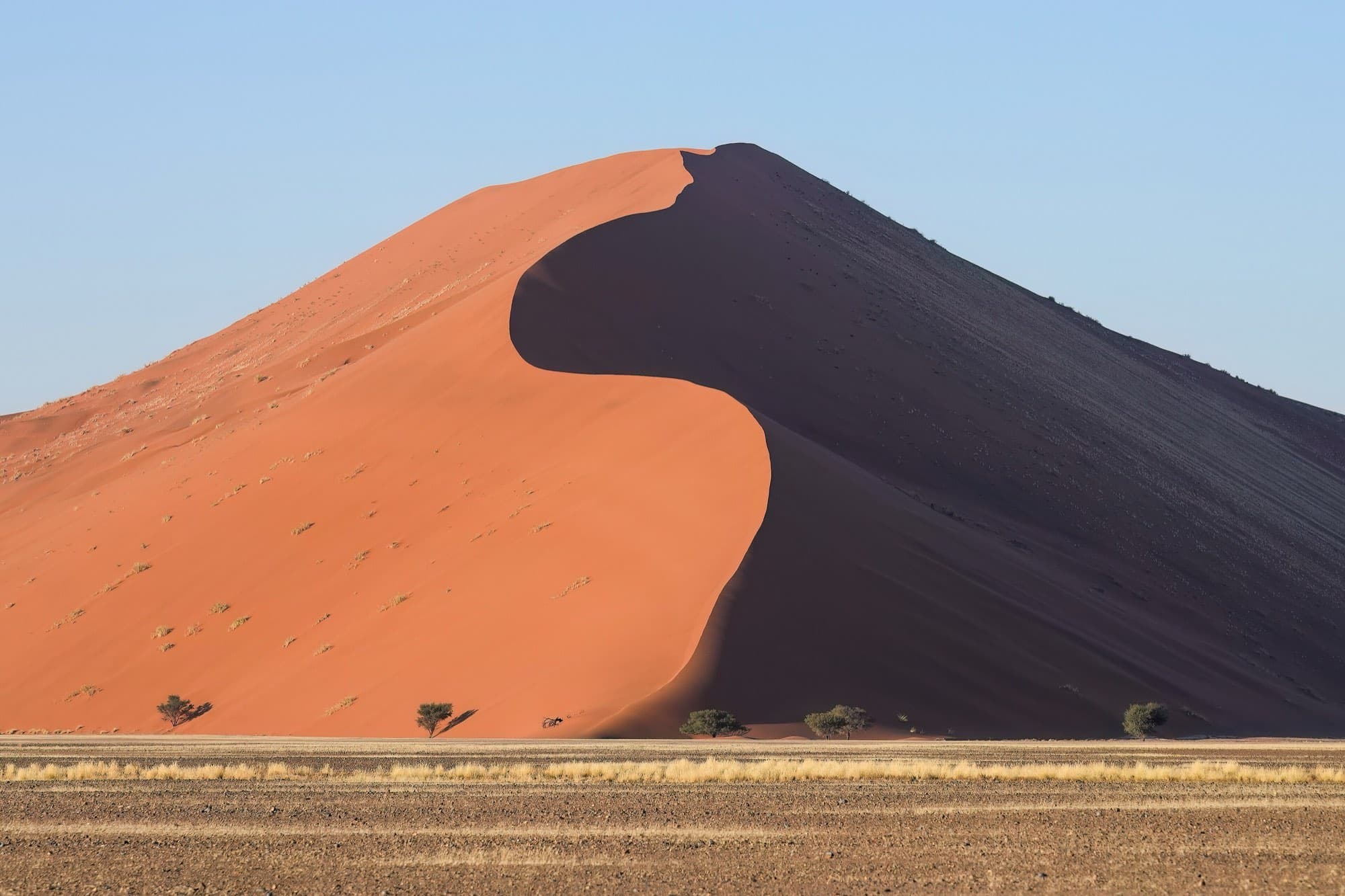
The gate opens an hour before sunrise and the race begins politely: a line of headlights doing the sixty kilometres to the dunes before the light arrives. Everyone is going to the same place for the same reason. The Namib at dawn does something no other landscape does — the dunes turn a red that looks lit from inside, while the shadowed faces go a blue that has no business in a desert.
The colour is iron. These sands have been oxidising for five million years, and the older the dune, the deeper the rust. The Namib is the oldest desert on earth; its big dunes are older than our species. When the first light hits a crest at Sossusvlei the temperature difference between the lit face and the shadow can be fifty-one degrees Celsius. You can stand with one hand in summer and one in winter.
Photographically it is a lesson in restraint. The scene hands you maximum drama, and the first instinct — wide lens, everything in — produces postcards. The dunes work at long focal lengths, compressed into abstractions: one lit ridge, one shadow, a single line where they meet. The best frames from Sossusvlei look like they were made with a ruler.
Deadvlei is the counter-argument, a clay pan of nine-hundred-year-old camel thorn skeletons that died when the river moved and never rotted because nothing here is wet enough to rot. Black trees, white floor, orange wall, blue sky — four flat planes of colour that seem painted. It is the most photographed place in Namibia and it still refuses to look real in person.
By nine the light is done and the heat begins. The desert gives you two usable hours a day and spends the other twenty-two reminding you whose schedule this is. It is the right ratio. Places that hand over their best light all day produce lazy photographs.
Written in the field for CaevraSpace. If you would like to republish or license this piece, get in touch.