Status
Habitat
Range
Group
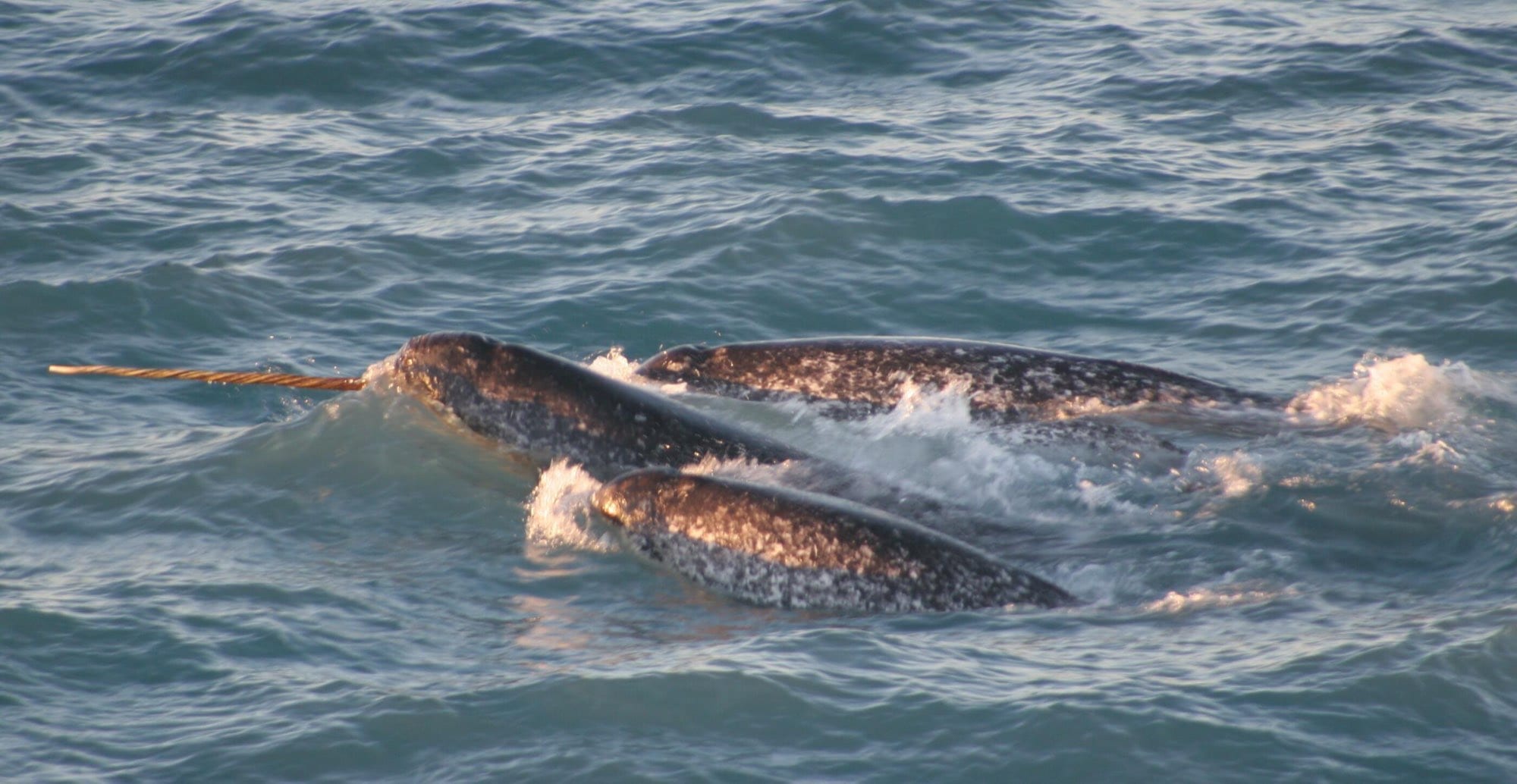
The tusk is a tooth turned inside out, wired with ten million nerves.
The tusk grows through the upper lip, spirals anticlockwise, and reaches three metres. Unlike any other tooth, its structure is inverted: soft pulp outside, hard enamel absent, with nerve channels running to the surface. It appears to be a sensory organ — responsive to salinity and possibly to water temperature — as well as a signal of male status, and narwhals have been filmed using it to stun fish.
Narwhals are among the most acoustically sensitive animals in the Arctic, navigating lightless winter water under ice by echolocation alone. Seismic airgun surveys and increasing shipping noise provoke a documented freeze-and-flee response, and the species has almost no behavioural flexibility about where it winters. Its Least Concern listing describes current numbers, not the resilience behind them.
The open shelf
More frames of the narwhal
Streamed live from the Commons Quality Images archive, eighteen at a time. Tap any frame to study it — each remains its photographer’s.
0 shown
Developing the next eighteen…