Status
Habitat
Range
Group
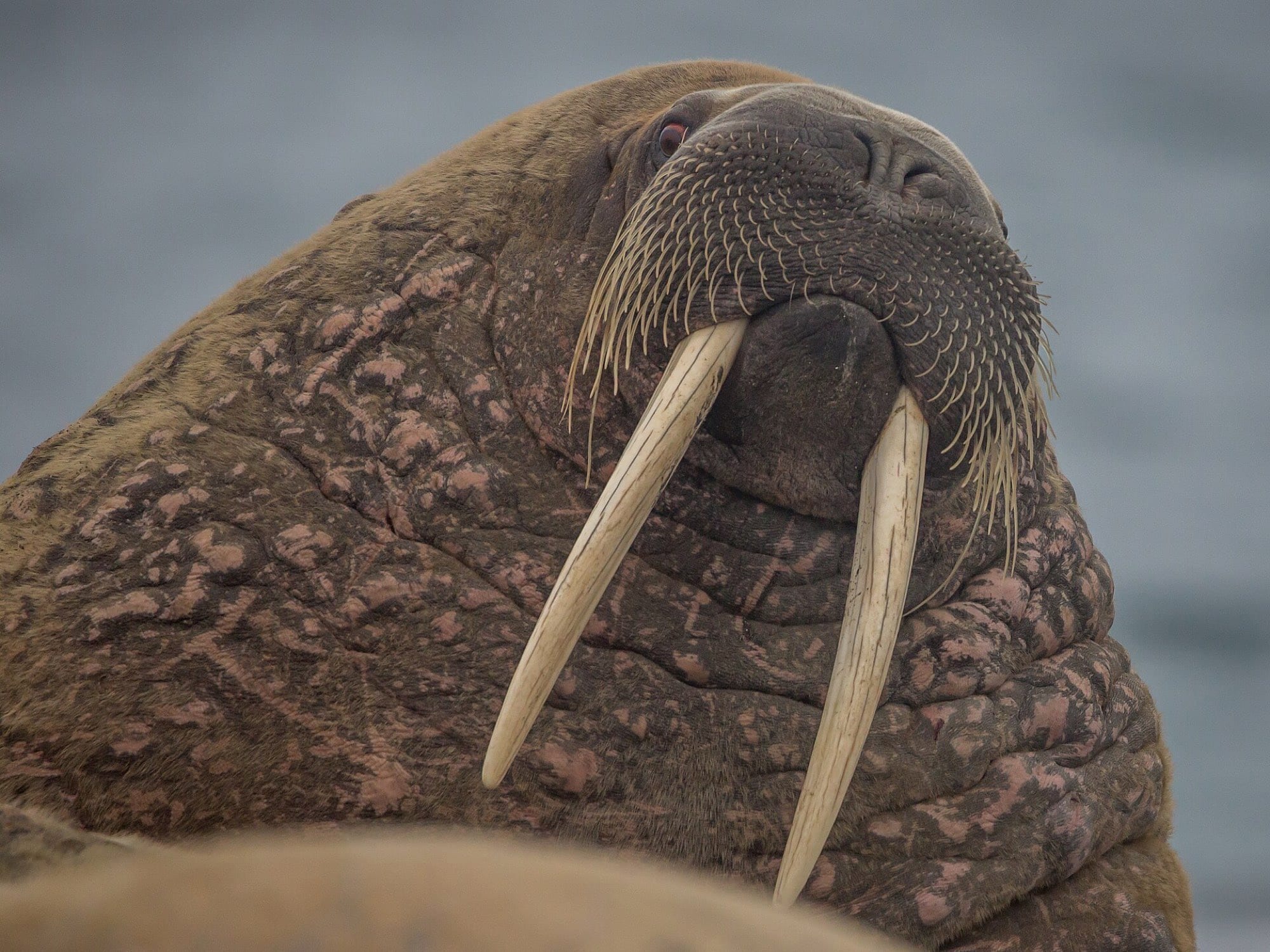
A tonne of animal that needs to rest on ice above shallow water.
Walrus feed on clams and other bottom invertebrates in water rarely deeper than eighty metres, using stiff vibrissae to find prey in sediment and suction to extract it. The constraint is not food but rest: they need a platform above the shelf, and historically that platform was drifting sea ice, which conveniently sat over the feeding grounds and moved with them.
As summer ice retreats past the shelf edge into water too deep to feed in, herds haul out on land instead — tens of thousands of animals on a single beach, where stampedes triggered by aircraft, boats or predators crush calves in numbers that ice floes never produced. The mortality is a second-order effect of ice loss, and it is the one being counted.
The open shelf
More frames of the walrus
Streamed live from the Commons Quality Images archive, eighteen at a time. Tap any frame to study it — each remains its photographer’s.
0 shown
Developing the next eighteen…